Showing posts with label aging. Show all posts

Sunday, November 9, 2014

Poaching Quince

What you will need:
Two pounds quince
Four cups water
Three quarters of a cup honey
A cinnomon stick and some cloves;
Ginger or anise, if you like.

There is bitterness in my life, I won't deny it. I spend more time than I ought imagining how life would be if it were not as it is. Why must there be strife and anger and decay? Why is it so difficult for those who are in conflict to see how much better life would be in every way if they were kind? Love sounds like a cute cliche to those in the midst of hatred. But it's still the right answer.

Quince is a hard, bitter, astringent fruit that is inebidble in its natural state.
(Try a little nibble if you don't believe me).
Yet it is closely related to apples and pears.
You will need to prepare the quince with care.

The Buddha was quite clear that all things are subject to change, that all things are subject to dissolution and decay, that all things die. I tend to think of this as relating only to me and my loved ones, or at most to all sentient beings, but that's not what he said. He said, "all things". This world, too, and all the beings in it. Stones and mountains and seas. Planets and stars and galaxies. Cars and trains and ships. All things must change, break down, and die.

Peel the quince and cut them in half, but be careful if you are using a sharp knife;
It is a very hard fruit and your hand may slip.
With a paring knife, cut out the center seed core.
Slice the quince into eighths.

But I don't want it to be true, that the world must also end. Strangely enough, I feel as if I am prepared for those I love to die, and for myself. Not that I will be happy about it, but I feel deeply that it is inevitable and merely a part of the natural cycle. But the world? It seems we should have done better, and still could. (Though I admit it doesn't seem likely). This, too, is part of the teachings, that even this world must go. Just because our malfeasance may well have been a part of the process does not make this any less true.

Put the honey and spices into the water.
Place the quince slices lovingly in.
Bring the whole thing to a boil,
Then turn down to the lowest simmer you can.
Cover loosely.

What I can do is bring light into the darkest places. Where there is sadness and pain, I can bring hope and help. Where there is conflict, I can bring my own peace. I cannot cure what ails the world, but I can do what is possible to make it less worse. There is so much of goodness in the world, and I know this in my heart. Evidence to the contrary does not negate the reality of this, and in fact gives the light, by contrast, that much greater luminosity.

Simmer for thirty to fifty minutes.
After thirty minutes check the quince.
What you want is a soft fruit that is not mushy.
And, look! As it cooks, the pale, beige fruit turns a rosy pink.

It's not always easy. I must always be reminded. There seems to be such urgency to the demands life places on me and on us. Yet nothing could be more useful than a little bit of uselessness. I cannot justify to you the time I take to sit at my desk and breathe deeply. This will not appear on my timesheet; I am not sorry. When I open my heart, freedom leaps out and I will share it with you. The world may not be healed but we, at least, will not go down enveloped in the flames of anger.

After removing the quince to cool
Continue to simmer the liquid uncovered.
Let it cook down.
It will make your whole house fragrant
And, when strained, yield a delicious nectar
That is good in everything.

This is a very good idea.


Sunday, November 2, 2014

Being dissed

It is sometimes difficult for me not to think apocalyptically. The environment, government ineptitude, SARS, MERS, Ebola, intractable internecine and international wars, the rise of radical factions of Islam, Christianity, Judaism, and even Buddhism; all of these threaten my equanimity and sense of peace. Not to mention the normal day-to-day ravages of aging, illness, and impending death; family struggles, traffic woes, dueling egos, and overwrought colleagues.

I have become disenchanted.

Hmm...quite a lovely word, disenchanted. What we take it to mean is that once upon a time (in a country far, far away, perhaps), things were wonderful, or meant to be wonderful, and now they are no longer so, and this is sad, sad, sad. But it seems to me that this word is much more informative than we give it credit for. What it truly means is that I was once living in a fantasy world, I was enchanted, as if by a sorcerer or a fairy queen, and now I am disenchanted, no longer blinded by fairy dust.

I have become disillusioned.

The Buddha was very clear that the cause of our suffering is our illusions, the resistance we exhibit in response to the normal vicissitudes of our lives. It is not bad or wrong that there are wars or disease, old age or death, struggles and hatreds, shame and remorse. This is the way of things—perhaps not as we would wish them to be (and there are tools we can and ought to use to change what it is possible to change)—but as they are, nonetheless. I have stepped out of my illusions into the light of reality. I have ceased (to the best of my ability) feeling resentment, hatred, and fear in response to things being other than as I want them to be.

I am disappointed.

I am no longer the self-appointed judge of what you do and who you are. I have experienced a profound realization (ah, if only I could always remember this) of the nature of things as they are, of people as they are. We are all the result of conditions which have accumulated over centuries, millenia even, to result in this one unique being. Our DNA is packed with instincts and understandings arising from the experiences of our forbears (and which are the mirror image of those who did not survive to pass their inheritance on). Our psyches are stuffed with the emotional and physical experiences not only of our lives, but of the lives of thousands upon thousands who came before us. What you bring to the table across from me is the sum total of all this, and our paths have been different, so how is it possible that I should believe you are just like me, will react and think as I do, will see the world as I do?

I no longer have this disability, this disadvantage, am no longer disaffected or disagreeable. These have disappeared, been disarmed (well, I wish). Things may be in disarray, but this no longer disobliges me. I can discontinue the behaviors that lead to distress. I need not be the source of discord, in me or in the world around me; I need not be disgruntled. There is less and less a discrepancy between my beliefs and my actions. I can discriminate between the true and the false.

I am disencumbered.

Sunday, June 22, 2014

If I find y

I found a piece of cardboard on the ground the other day
An almost finished sign scrawled on it that said,
If I find y

And I wondered

What would have completed that sentence?

Perhaps...

If I find you have been sleeping with my wife...
If I find your wedding ring...
If I find you dying, crying, bleeding...
If I find yogurt-covered raisins...
If I find youth...
If I find yak...
If I find young, nubile women...
If I find yesterday...
If I find your conversation scintillating...
If I find yanking on this chain causes the world to end...
If I find you on fire...
If I find yellow daffodils...
If I find you have a terminal disease...
If I find yams all hot and steamy...
If I find you all hot and steamy...
If I find yodeling annoying...
If I find years and years and years have gone by and I have no idea why or how and you have been here all that time and I am grateful and it makes me stronger and love being the only thing that matters feels less each day like a cliche and more and more like a hard, cold truth...well...then...

I will:
Run for help
Fight
Scream
Come find you
Look the whole world over for you
Search for you until I die

I will:
Love it
Love you
Cherish you
Hug it
Hold it
Treasure it
Yes
Yes, even the yak
I promise

If I find y

Sunday, April 20, 2014

The Beginning of the Path

The beginning of the Buddha's road to enlightenment was when he was removed from the cocoon of his sheltered life as a prince of the realm and taken out into the world, where he saw three things from which he had been protected his whole life. First, he saw a person who was ill. Second, he saw a person who was old. Third, he saw a person who was dead.

It may be somewhat beyond belief to think that a young man (he was married and a father when this happened) could be sheltered to such an extent that he would never have encountered any of these things, but of course the life of the Buddha is more metaphor than fact. (We know the person existed, but the literal truth of who he was is shrouded in the mystery of thousands of years of intervening history). What we can understand from this story, though, is that all of us attempt to shelter ourselves from the reality of our lives. Rather than pretend they do not exist, though, as the Buddha's protectors asked him to do, we pretend that they should not exist.

I acknowledge that this is a subtle distinction, but only on the surface. It we were to pretend that illness, old age, and death did not exist, we would be certifiably delusional. If we pretend that these should not exist, however, we are within the mainstream of Western thought. It's not just the blatant desire to stave off aging that we see in every ad for cosmetics, not just the diets, exercise programs, and surgeries we contemplate. It's also the wish-fulfillment fantasies of "reality" television and advertising for products from colas to vacations to Viagra that will turn back the hands of time.

I know a couple who are struggling and whose marriage may not survive. I know many people who are dying from alcoholism and drug addiction. I have a friend whose son was recently diagnosed with autism. I am witnessing my parents' dissolution through the slow-motion landslide of aging and dying. Several friends have cancer. My work is with those who have one or more of the most devastating physical, emotional, and/or psychological diseases known. I myself am feeling the gravitational pull of my age, and have been for some time. I live near where the Oso landslide happened. Ferries sink, floods happen, tornadoes hit, typhoons inundate, malaria decimates, hunger eliminates, lack of clean water destroys. There is grief all around.

But here is what the Buddha discovered: it is not the events that cause harm to our souls. It is not even our reaction to these events. It is the belief that only good things should happen to us and that bad never should. It is the belief that when bad things happen we are being punished and when good happens we are being rewarded. It is the mistaken belief that any event that is not occurring right this moment has any reality at all.

It seems to me that I spend far too much time in the "Oh, no!" mode. I have things all set up to work in a certain way and then they don't. Oh, no! It's a tragedy! Or they work just great and my response is, "Yay, me!" The other, associated problem is the anticipation of the fulfillment of the expectation, what might be termed "Any minute now..." thinking. I vacillate with mind-numbing rapidity from "Any minute now..." to "Oh, no!" to "Yay, me!" to "Any minute now..." to "Yay, me!" to "Oh, no!" If I am not aware, this is how I spend my life.

As I mentioned above, the biggest problem with all this is what is lost. What is lost is this very moment. "Yay" and "Oh, no" are focused on the past (and future thinking about how I can get more of the former and avoid the latter), while "Any minute now" is entirely about the future. Nowhere in this scheme is there any room for the present moment, which is the only time there is.

Of course, I am not saying we should all go blithely through life ignoring what happens, nor was the Buddha saying this. The first of his Noble Truths is, There Is Suffering. His own definition of what he came to teach was Suffering and The End of Suffering. So, he knew, we know, that suffering is out there. But what the Buddha went on to say was truly revolutionary: that every time we push against the bad or cling to the good, we add to the suffering, that the only way to truly be free is to thoroughly and unconditionally accept the reality of each moment of our lives without any opinion whatsoever about whether it is good or bad. This sounds like oblivion, but truly isn't. Rather than ignoring the reality of what is, the Dharma encourages us to immerse ourselves in it without fear or hope.

We are all Buddhas-in-waiting. Freedom is around the corner, when we live in the moment that is in front of us, when we embrace the adder with the bride, the evil with the good, the rain with the sun, illness, old age, and death with health, youth, and life, ignorance with wisdom, faith with doubt. This is possible, in this very life. It is ours for the taking.

Saturday, July 20, 2013

Pain

"When sorrows come, they come not single spies, but in battalions."
--Hamlet, William Shakespeare

Life has been difficult lately and this morning I hit my head. Hard. On a kitchen counter. Wham! Ouch.

The past week I have had back pain, the like of which I have never experienced. I know how bad back pain can be and that many people suffer from it chronically. My pain is not as bad as that (though pain is very subjective, so who's to say?) and it's only been a week, so it feels a bit silly, selfish even, to complain. But it hurts, man. I don't like it.

There's troubles at work, too. Much of that is of my own making. The job is changing and I don't like the way it's changing. The management has changed and I don't like the way it changed. Personnel have changed, the whole atmosphere in health care is changing and uncertain, the economy is causing administrators to squeeze and to justify every dollar spent, which increases the pressure on us to justify our existence. Then there is my acting out in response to stress, which has had consequences, which adds to my stress.

And I'm too damn busy. And there is too much suffering in those I love. And the world is a mess.

Nice, huh?
Then there's the kitchen counter. My physical therapist wants me to do chair push-ups to strengthen my shoulder (which, as long as I'm doing the pain recital, has been bothering me for over a year)  and I did the push-ups with a wooden chair. Bad idea. Chair (which was pushed against counter) collapsed and I broke the fall with my head. No loss of consciousness, but significant loss of dignity. And a big old knot on my forehead for a long-term reminder. Kathy decided to stay home from work to monitor me to make sure I act no stranger than usual so if I do she can rush me into an emergency CT or something.

I'm the luckiest man in the world. Think I'm kidding? I'm not. I have a loving wife who cares if I have a head injury and insists on being here for me. I have something to do about my pain. I can laugh and pick up the pieces of the chair ("cheap piece of shit") and lug them downstairs. I can afford to buy a new one. I have access to a CT scanner if I need one. I have a physical therapist who is helping my shoulder heal. I am 57 years old and up until now I have not  paid much of a price for my age and the fact that I did many foolish things as a kid that should have had more serious consequences than this. I have a job and it's not in jeopardy, and if I dislike it enough, I can probably find another one. All the things I am "too damn busy" with are wonderful things I have chosen.

And then there's this: one of the things the dharma has taught me is that, as the saying goes, pain is inevitable but suffering is optional. When I am able to focus on the pain and not on my resistance to the pain, when I can meditatively consider it, really look at it, not with fear but with curiosity and interest, it is transformed. Not that it no longer hurts, but the nature of the pain is changed from one of a problem to just another opportunity to practice awareness. And in awareness is freedom. And in this freedom, taken to its logical extreme, is nirvana. It's all grist for the mill. It is only in my small, controlling, whining mind that this is not so. All is well.


Saturday, June 15, 2013

Thaings

I pick up trash while I'm walking and occasionally come across something wonderful. Once I found a small slip of paper, on which someone (I suspect an older child) had written, "This is not going to work." In response, in a younger child's writing, was this: "It will if you THINK it will".

The other day I picked up another scrap and on it was, "Thaings I wish could have Happen." There was nothing on the list, just that title. Don't we live much of our lives in pondering thaings we wish could have happen? Along with those we wish hadn't happened and others we dream still may happen. The same thing was happening in the Buddha's world 2500 years ago. Because we are planning animals (one of the few advantages we have over our predators) and can analyze our past actions and make corrections ("Almost got eaten that time, better revise my hunting technique!"), this kind of thinking is hardwired into us. Unfortunately, if not used for survival, these ways of using our minds lead directly and inevitably to suffering, which the Buddha defined as everything that is not in this moment.

After all, we know what the ephemerality of the moment is. I was just speaking with a friend today about this: who we thought we would be ten years ago isn't even close to today's reality, which means we have absolutely no idea who (or where or how) we will be ten years from now. Dead? King of the World? Who knows? Who cares? Much better to tell that outrageous fellow chattering away in my head to take a break so I can enjoy the moment in which I am existing instead of pondering and kvetching about future and past, that's what I think.

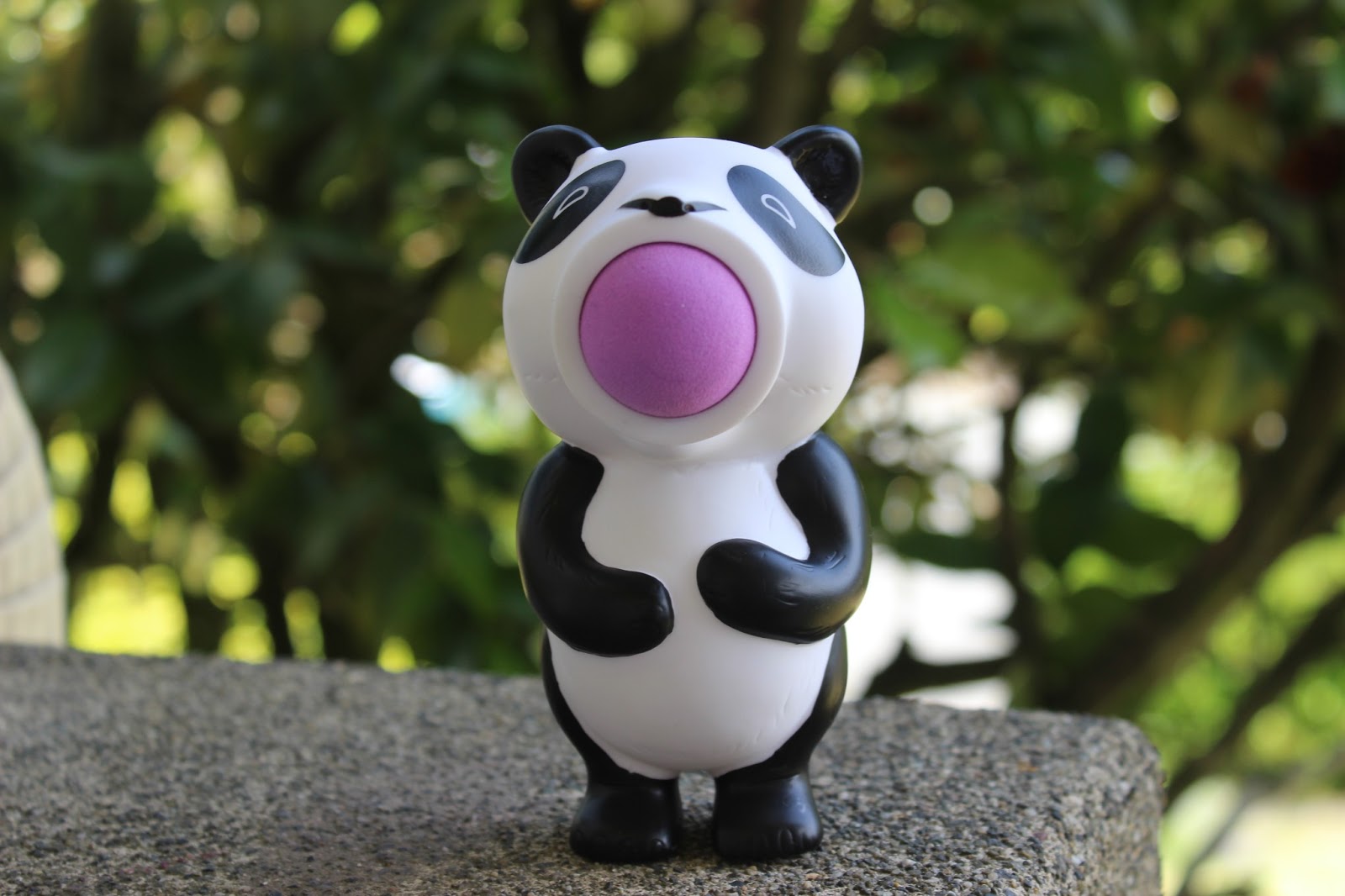
Had a birthday. I am 57. I don't feel that old, except first thing in the morning, when I feel 157. I had a good birthday week. I didn't do anything all that exciting, but that's fine with me—exciting is exhausting! Among other things, I got a Panda Popper (he shoots that little purple ball across the room and does so with a satisfying "pop!").


I was complaining about the freezer not being a freezer last week, and during my birthday week (the day before my birthday, actually), that was finally fixed. Our freezer actually has frozen food in it! Imagine that!

And, best of all, we finally got our new front stairs. I paid the company who did them (and then redid them) yesterday. What a load off my mind. Here they are: Ain't they pretty?

Point being that thinking about "thaings I wish could have happen" did me absolutely no good while I was going through all that turmoil; they took care of themselves in their own good time.

I live a good life. So do you. It is enough. And more than enough. It will work if you think it will.

Saturday, May 4, 2013

Uncertainty

There's a lot going on right now but it's difficult to know how to write about it here, at least without sounding like I'm whining.  I'm not  whining. No, really....

I am reminded by a loved  one that getting things out of my head is always helpful, no matter what. On the other hand, I don't want to feel as  if I am vomiting all  over these pages as a way of making myself feel better. Nonetheless, here goes:
  • The nature of my work is changing. 

  • My son and his wife are moving away. This is a good thing—she is going to graduate school—but Michigan is a long, long, long way from here.

  • My mother has been  in a skilled nursing facility for several weeks getting IV antibiotics for a persistent infection. She's home now, but is still not entirely well. Both of my parents are just plain old. Meanwhile, my shoulder has been giving me trouble, making me feel as if I am getting there myself.

  • My friend Debbi is dying.

  • I have a coworker who's husband is going through much the same process that Debbi has, but he's only at the beginning.

  • My relationship with my wife is shifting. Of course, this happens all the time, as anyone in a long-term relationship can attest. But the big changes are more noticeable and the big, noticeable changes come to pass when big events intervene.

  • I have lots of committments to travel, pretty much entirely around my family. These are all good things—my parents, my brother's birthday, visiting my son and his wife (and their lovely kitties, to which I am both deeply attached and seriously allergic, an interesting combination). It is all very good and seriously stressful in aggregate.

  • When I am stressed (no surprise here) I tend to eat to excess. As I have shared before, I am not an eat-the-whole-cake kind of overeater. To borrow from  the lexicon of alchoholism, I am a maintenance overeater, not a binger. Which has its downside in my ability to remain in denial about it while I am stuffing my face. And (this is key) my lack of discipline about my eating actually adds to my stress rather than relieving it. In the moment it feels good, but then the feeling  of chaos that comes with being so out of control just adds to the stress.

  • OK, and this is the hardest one to write about: I just don't feel very connected to my fellow human beings. My communication with family, coworkers and friends is cursory and strained much of the time, when it happens at all. I yearn for more meaningful contact in my life and fly around trying to be all things to all people falling short (I mean, who wouldn't?)
I have nicknamed all this The Five D's: Distance, Dissolution, Disease, Disability, and Death. A cheery group. The point here is, though, that these happen to us all and happen all the time. We are all moving away from each other, if not geographically, then emotionally. We are also all moving toward each other; it is a shifting dance. Dissolution, Disease, Disability, Death—these are in the nature of what it is to be alive, at least if one does not die young. We must all face the dissolution of who we are today in order to become who we will be tomorrow. That it happens gradually for most of us is no proof against having to face the reality of it.

I know that much of what goes on with me is a lack of trust. My meditation group was talking about this just the other day. I don't trust easily and do so rarely. I have pretty good experiential proof that people are not trustworthy. Life itself is one patch of shifting sand after another; it's hard to even trust the ground upon which I stand. Which is the whole point! Yes, the Buddha would say, yes, now you've got it! Nothing is substantial, all is shifting, cloudlike, unable to support your weight. Lie back. There is nothing to do. Nothing to be. Nothing to become but free. It is enough.

Sunday, March 3, 2013

Put the Lime in the Coconut

My visit to the doctor last week yielded some fairly ambiguous results. I am, despite my best efforts, getting older (go figure). I have nothing seriously wrong with my shoulder, which is, of course, good news, but also means that all I can do about it is work hard with a physical therapist. Damn. One can always hope for a quick fix, eh?

My labs told me pretty much what I already knew. I am what I call "pre-pre-diabetic," meaning the labs that measure such things say I am not yet there—in fact not even very close—but am trending in the wrong direction. Whereas my fasting glucose was just barely outside the range of normal, I would not consider myself in no danger whatsoever unless my result were smack dab in the middle of normal. I find little consolation in a result that was just barely on the other side of desirable. As I mentioned in my last post, my HDL was also slightly low. That does not bode well for the future, either. I am only 56 so must assume that, if nothing changes, I will eventually be facing larger problems.

*Sigh*

Of course, my immediate response is panic. I must eliminate all bad foods, all sugar, all fatty foods, all saturated fat....Silly, of course, especially the elimination of saturated fat, at least a small amount of which is essential to my physical well-being. When the small mind is in charge, nothing will do but an all-out assault on the Problem, whatever it may be.

But what is most fascinating for me is the shift in my relationship to food in a broader sense. This has been the theme of much of this blog. It is clear that I, that most of us, do not use food merely for sustenance. It is a social force, a source of comfort, a pleasure, a joy. Fat and sugar are two of the surest sources of pleasant food experiences. Nothing inherently wrong with any of this, of course. But when one's health is impacted, whether that health be spiritual or physical, different choices must be made. And from the point of view of the Dharma it is in facing those choices that the rub comes in.

The questions become these: am I living my life in full awareness of my relationship to food? Or do I wander through life trying to use food to solve insoluble problems? Is my response to discomfort (pain, undesired emotions, stress, unhappiness) to reach for food, as if it could take this away? Am I, in other words, hungry for something other than food and trying to use food to feed that hunger? Am I eating with mindfulness or eating to mask things of which I ought to be mindful? In response to these realizations, am I going overboard in the other direction, into the heedlessness of obsession over "healthy" foods? (I put that word--healthy--in quotes because if I run after bodily health at the expense of my spiritual growth, that is far from any kind of health I truly desire).

The even more significant question is this: why am I doing all this? Why should I struggle to achieve any understanding of this or any mastery over these impulses if the outcome is nothing other than more struggle at the next level? The Buddha had a vital and unequivocal answer: spiritual attainment is possible for all of us, in this very lifetime. The impression is sometimes given that in order to achieve anything like enlightenment, one must strive for lifetimes upon lifetimes. This may be true. On the other hand, there are many stories in the life of the Buddha where he speaks a few words and people are struck enlightened, just like that.

Perhaps it would be helpful to define what is meant by enlightenment, at least in the way I am using it. Enlightenment is a state of being in which there are no preferences, no reactivity either for or against, complete and utter acceptance of the way things are. It is ultimate peace and serenity. But it is not passive; far from it. Enlightenment is total engagement in the ways of the world with a loving heart that does not judge but seeks to nudge others toward the ways of peace, justice, and harmony, all in the service of guiding them toward their own enlightenment and toward the enlightenment of yet others. The Bodhisattva (an enlightened being) does not sit idly by when violence, injustice, or prejudice rears its head, but works in ways that are loving and kind to change them, reflecting back their opposites (gentleness, justice, inclusion) as an antidote to the poisons that threaten well-being and peace. Enlightenment sees these unskillful mindstates and actions not as evils but as unwitting barriers to ultimate joy. Both victim and victimizer are struggling in a darkness that can be illuminated.

To get back to the question of whether it is possible (or even desirable) to achieve enlightenment in a flash, or whether it takes lifetimes: the answer is yes. Either is possible. Any time span in between is possible. But here's the kicker—as can be deduced from the definition above: one of the keys to enlightenment is not desiring it. Since striving toward this state is antithetical to the state itself (even the idea of "toward" is inaccurate), it is impossible to set a goal of being enlightened and then to work diligently for it. At this point, the small mind wants to throw in the towel and give up. What? A pot of gold at the end of a rainbow that I cannot work toward? Isn't enlightenment like the PhD of spiritual growth; I jump through enough hoops and pass sufficient trials and then am awarded the crown?

Well, no. In fact, desire is one of the barriers to enlightenment. So, what's a human to do? I believe with all my heart that the journey toward this ultimate mindstate beings with acceptance. We start there and work from that solid base. (A dictionary definition of acceptance I like: "to receive something offered, especially gladly"). We are as we are. Life is as it is. Reacting against (or for) any of it only creates suffering, divides the world into the camps of "wanted" and "unwanted", with us as both the arbiter and the one who strives incessantly to have the one and reject the other. The state of acceptance is a radically different way of viewing the world.

In my mind's eye I see a man who imagines himself in a pit. Out of the sky food is constantly falling. As they fall into his pit, the man immediately evaluates these foods as good and stores them away or as bad and throws them out. He does this constantly. He does this so assiduously and unceasingly that he never has any time to enjoy those tasty morsels he has stored away. His judgment is so clouded by prejudice and ignorance he often throws away the very best that is offered. What the man in the pit doesn't realize is that he is not in a pit. He is on a vast plain, infinite in its scope. He is in no danger of being overwhelmed by what falls his way; he can let it be. He need not judge what is good or bad, but can taste of each and find that which is pleasing or instructive or freeing. Some of what he tastes is bitter, but he need not reject anything on this basis. He can ask one simple question: is this nourishing? And he will find that all of it is. It is enough.

(P.S. If you find the title of this post perplexing, that's the prescription the doctor gave in a Harry Nilsson song).


Sunday, February 17, 2013

Lost

Not sure where to begin. I feel so lost sometimes, as if the core if who I am gets called into question. I know I have written about this feeling a great deal lately. But this is, for me, the most profound of all experiences, this contrast between my reality as a being that does, after all, exist in some form (however ephemeral)  and the truth of the constantly dissolving, crumbling nature of that beingness.

Does this sound very foreign and strange? Contradictory and a little nuts? Yeah, it feels that way to me too, quite often. Yet it also feels more entirely truthful than the next largest truths there are. I want for things to be certain and comfortable, always. Yet because I desire the certainty, I cannot have the comfort; there's a Catch-22 for you! It's as if I had hitched my happiness to the sun always shining—at least once a day for half the day (or thereabouts) my hopes would be dashed.

My parents are old and becoming gradually less able to care for themselves. Contemplation of the inevitability of aging, decay, and death is one of the Buddha's primary instructions to us, an entry point to the holiest of understandings, that all things are of this nature, the nature to arise and pass away. We can understand this intellectually with great profundity, yet have no capacity to face the reality of it in the form of our own illness or injury, or the slow diminution that is the inexorable march toward the end of life as it is experienced by those we love. Because it is deeply uncomfortable, of course. Death is one thing, but gradual loss is quite another. Here's the Buddha's take on this, though: suffering is my resistance to the truth; the experience itself is entirely neutral.

Easy for him to say.

There is another factor in this situation with my parents: we cannot afford to provide them with everything that might make this journey as comfortable as it could be. This precipitates us into hard choices and difficult conversations no one wishes to contemplate.

So much comes down to humility, it seems to me. In the contemplation of the great mysteries, even in thinking of the smaller ones, the minor questions, an honest survey reveals how entirely helpless I am in the face of these forces. Not merely the forces of old age, disease and death, not just the forces of nature that destroy homes and lives, not only the forces of economies and injustice and misplaced societal priorities, no, even in the contemplation of the smallest realities of my existence I am almost entirely powerless to change things. I can choose which shirt I wear today and, perhaps (if I am willing to be uncomfortable) not to wear a shirt at all. But I can choose neither the nature of the body upon which I place the shirt nor the need it feels to be clothed. I cannot willy-nilly decide to disregard decades of conditioning and wear a dashiki instead, not with any level of comfort. I must humble myself to know that I am the sum total of the causes and conditions that brought me to this point. Far from being a free agent, I am at the mercy of that which led to this time in my existence. I must, in the words of the old phrase, "dance with him what brung me".

I am tired today, without any identifiable reason. I have goals and plans and schemes, but I am tired. I probably won't do most of what I had in mind. I must listen when my body tells me to halt. I need to make myself a steward of this body and this mind in order to move forward into a deeper understanding of what it means to have a body and a mind.

There is no easy solution to my parents' situation, of course. There are complexities piled on top of complications. Also to be considered is the fact that the grooves of the relationship between my parents were first laid down over 70 years ago when they first met and have been worn and deepened every day since. We may be as logical, sensible, rational, caring, loving, and reasonable as we wish, yet this will be no proof against these well-worn patterns of love between them. Because it is love, that's clear, even when (especially when?) they bicker or disagree or grow impatient.

I began this post by saying I was lost. And I am. But lostness is the truth of our lives. It is when we consider ourselves found that we are living most in delusion, if only because even if this feeling is true it cannot last. Where I have found myself will change, I will change, and once again I will be lost. We are all wanderers in this wilderness of being alive and human. It is not easy. But it sure beats the alternative. It is enough.
Overcome any bitterness that may have come because you were not up to the magnitude of the pain entrusted to you. Like the mother of the world who carries the pain of the world in her heart, you are sharing in a certain measure of that cosmic pain, and are called upon to meet it in joy instead of self-pity.
  Pir Vilayat Khan

Friday, December 28, 2012

Observations

Things rattle around in my head sometimes. (I'm hoping I am not unique in this). Absurdities and oddities from the human experience that refuse to go away. Here's a few:

? Isn't the moral of Rudolph the Red-Nosed Reindeer that it's OK to revile and exclude someone who is different until you have a use for them, when it becomes acceptable to love them? Is Rudolph, then, the archetype of the undocumented worker? You know, as in the bigots who say, "Can't stand those wetbacks...except Juan, who takes such good care of my roses. Oh, and Maria, who cares for our children. I LOVE them." A further question: shouldn't Rudolph have told Santa where to put his fogbound sleigh? Founded Occupy North Pole? The Rights of the Red? For that matter, Santa's been doing this for a couple of centuries and he still hasn't figured out how to fly in fog, for Christmas' sake?

I drive rental cars quite often and wonder why in the world they always give us two keys on a ring that can't be opened. Isn't the whole point of having two keys to put one in your pocket in case you lock the other key in the trunk or something? What could possibly be the point of conjoined keys?

While we're on the subject of rental cars: why do the buttons and switches have to be so different from one car to the other? I have to spend an inordinate amount of time finding out how to operate cruise control, stereo, turn signals, heating and cooling. And the different places they put the plug-in jack for connecting my mp3 player to the car stereo is just intentionally cruel, sadistic, even. Can't we just decide and all do it the same way? While they're at it, could they just put the freaking fuel door on the same side of all cars and make them all open the same way? And, hey, what's up with some cars keeping the radio on after I take the key out of the ignition (until I open the car door)? When I say OFF, car, I mean OFF.

One more on this theme: when I get into a rental car, it is almost always evident that the side-view mirrors have been adjusted to look behind the car. Folks, side-view mirrors (stay with me here) are for looking at the side of the car in order to see things in your blind spots. If you adjust them to be supplemental rear-view mirrors, it defeats their entire purpose.

Is tetherball the dumbest of all possible games?

Doesn't it seem that there are far too many talented engineers with too much time on their hands? I give you as Exhibit One those cheap wind-up toys that do fairly amazing things. I had one little car that went forward a foot or so, then a lever emerged from the bottom of the car, turned it all the way over, at which point the car continued on its way. And the engineering implied by those wind-ups that do a backflip, land on their feet, then do it again is mind-boggling  Another example: someone figured out that plastic drinking glasses, when stacked, have a tendency to stick together, so they put a little flange inside the glass about 4/5 of the way down, to keep them apart but still stacked. One more: in a little lunch box thingy I got a folding plastic fork. I know it doesn't sound like much, but a close look at this thing (which had to be cheap enough to mass produce) reveals astounding miniature engineering.

Since we're basically made of seawater (our blood has the same salinity as the ocean), why can't salt water quench our thirst? For that matter, why hasn't a species intelligent enough to put a powerful computer in every phone figured out a cheap, efficient way to desalinate sea water?

Nothing drives me as crazy as things that are designed to do only one thing and do them badly. The most glaring example is coffee carafes. They are for pouring coffee into cups but invariably pour a substantial portion on the counter and/or floor. Here's another one: return slips that don't fit return envelopes, like the slip you are supposed to return with your check to pay a bill. Now, this may seem petty, but consider that the company that made these made and sold them as a compatible set, meaning they must have either known they didn't fit one another or were too stupid to come to that conclusion.

Around here I quite often see signs that say, "Illegal Trespass Prohibited". This drives me nuts. Trespass is by definition both illegal and prohibited. All illegal acts are prohibited. Does anyone really think that saying it three times will deter anyone?

What is it with people who won't take their right-of-way at four way stops and other places? Do they really think this is considerate or kind? Folks, the most considerate, kind, intelligent thing you can do is to take the right-of-way the situation offers you and do so briskly. When you foil expectation in these situations, you only make the whole exchange more frustrating and dangerous.

It bugs me that machines like microwaves, stereos, computers and cars display messages like "Hello!" and "Bye" and "Your Meal Is Ready". It's not so much that it creeps me out (which it does, a little), but do the designers really think this makes the whole experience more evocative? I don't require a warm personal relationship with my toaster oven. I require toast.

Why do some people use motion detector car alarms on busy urban streets? Hello! Yes, every bus and truck that goes by will set off your alarm. Get a clue.

I have stopped watching some popular comedy shows (eg, The Simpsons, Seinfeld) because I thought their humor had become mean-spirited. Yet I have no problem watching programs (eg, The Wire, Breaking Bad) in which murder and mayhem are common plot devices. I guess I don't mind if you shoot each other in the head as long as you aren't mean about it. Nice.

As I get older, the term "absent-minded" takes on a more sinister and literal meaning. I mean, sometimes the sucker is just...gone!

OK, I know, not exactly Earth-shattering, but don't you sometimes just stop in your tracks and say, "What were they thinking?!" or, perhaps, "What was I thinking?!" I do.


Saturday, August 11, 2012

The way out

What a difference a week can make! I am feeling very hopeful and strong today. I am content with my life and its course. What made this change? Many things, but I must say that perhaps the most important was for me to recall an aphorism I coined a few years ago: "The way out is down".

Whether we like it or not, the way out is down. When we are in despair or darkness, when we have to struggle just to make it through another day, we can strive to go up (cheer ourselves, turn to external pleasures to lift us up, try alcohol, drugs, sex, being with others, blame the circumstances or other people) but it doesn't work that way, as far as I can tell. We must have the courage to go down into the depths of that darkness to emerge on the other side victorious, to emerge into the light.

This is not  an original concept, by any means. Perhaps its most famous proponent is the poet Robert Bly, who writes and speaks about it quite a bit. His inspiration, in turn, is the world of myth and fairy tale, wherein the the hero or heroine goes down into the pit in order to find the light. This is one of the universals of storytelling. We know that Snow White, Cinderella, Sleeping Beauty and their coevals had to go into the darkness (of the forest, of the hearth, of the long sleep, etc.) before they could be redeemed. Hansel and Gretel could not be adults until they came through the woody exile imposed upon them by their stepmother (and what is that stepmother but an avatar of capricious fate, ever and again throwing us into the quagmire of our daily lives?). It may seem sick to cook the witch up in the oven intended for them, but mythopoetically, nothing else makes sense. The witch (which I suppose is a stand-in for our own insecurity) must be entirely destroyed before we can emerge to claim our birthright.

And we will never be the same people we were when we went into the shadow realm. Frodo Baggins was just never the same hobbit, though he was a wiser and kinder one, following his harrowing journey through darkness in many forms. Nor will I be, though that is perhaps what frightens me most. I don't relish the idea that I can and will change so thoroughly and that such a change is not within my power to choose. Yet resistance to that change is precisely what keeps us caught up in the circle of samsara, in the round of suffering that simply never ends if we don't learn the lessons available to us during such times of sorrow. Life IS change and to ride this rollercoaster is to be forever in the midst of it.

The first noble truth of the Buddha's path is that there is suffering (or, as modern translators seem to prefer, "there is dissatisfaction"). Our lives are such that the things which cause us to feel that something is amiss will happen over and over again. It's not a plot against us, it is just the way things are. Our car wears out or gets hit. We fall and break an arm. We lose a job. We divorce. A loved one dies. A cherished friendship does not last. We age. We grow ill. We face our own death. It happens. This is the stuff of life and the stuff that can lead to suffering, if we allow it to be.

But it doesn't have to be that way. We need to recall that the third noble truth is that there is an end to suffering. The fourth noble truth details the path out of suffering, but can be summarized in the simple word, "acceptance". If we can come to accept what comes our way as the reality of what is, our suffering will come to an end. This is not, I should emphasize, passivity. Often we should and even must take action to alleviate the suffering of ourselves and others, but acceptance must come first. Take a cancer diagnosis, for instance (though, to be clear, I do not now nor ever have had such a diagnosis). Though we may be angry, afraid, dejected and depressed by this, when we come to accept the diagnosis, we can find joy not only in the other aspects of our lives, but in the cancer itself. Hundreds of books (and even a few good ones) have been written about the wonderful teacher such a diagnosis can be. But it would be foolish to stop there. For most of us, in most situations, we will also want to use our newfound acceptance to guide us to study the disease and treatments for it, to realistically weigh our abilities and to do all we can to eradicate it. If we proceed in anger or fear, though, we do not give ourselves the benefit of the great wisdom that can arise with acceptance. And when the time comes when we must lay down our weapons and determine that the cancer will eventually take our lives, we can lie back in the arms of that acceptance to help us take the next step in our journey with love and calm. If we go through an experience such as that while railing bitterly against the unfairness of it all, we will not be able to harness the great peace of surrender.

Friday, June 22, 2012

Up In The Air

Thursday, June 21, early morning: I begin this post high up in the air over the flatlands west of the Rocky Mountains. Soon I will be in Denver, then on to Milwaukee, where my mother-in-law is dying.

I suppose I should apologize for writing so much the past few weeks about death, but I won't. The way I have been thinking of it is this: if I were in the circus, I would write about clowns and elephants. As it is, I happen to be in a time of dying and decreasing function in those about me, so that is what is on my mind.

I am feeling dislocated and anxious, though I suspect this is mostly to do with getting up so early. The day after the longest day of the year and I still arrived at the airport in the dark. Of course, there's also the fact of the suddenness of this trip; this time yesterday I wasn't even at work yet and it was only after lunch it was decided I should come. It's been a whirlwind. But I feel as if I am heading toward something useful at last. My birth family has been in an uproar the past few days over my parents' diminished capacity, my wife has been in Milwaukee while that situation is unfolding, and the friend I wrote about in my last post is facing all that. Meanwhile I sat at home doing housework—useful but feeling irrelevant.

(Speaking of that friend, I might as well admit here to an insecurity: so few people commented on my last post that I fear you hated it; mostly I fear that the person it was about disapproves of it. I have thought of no reason why I should regret it, but I carry the fear anyway. Not your problem, dear reader; saying it in this post is just a way of trying to keep it from clanging about in my head...)
.
Is it perhaps selfish to want to be relevant to other people's process? But of course it is my process, too, and I want to be present for it.
******************************************
Late morning: Now up in the air between Denver and Milwaukee. Nothing to see but agricultural fields all the way to the horizon, and beyond, I imagine. In a certain way this is dull and repetitive to look at, but astonishingly ingenious in design and execution. To think that all of that land was forced into some sort of fecundity by human hands in one way or another—if not directly, then through the machines they brought into being—is unnerving and inspiring. It is difficult for me to imagine the vastness of it until I am up here like this. I especially like the circular fields, clearly made that way to accommodate straight-line sprinklers on a central pivot. (Though I can’t help but wonder about the wasted space that making a circle in the middle of a square implies. I also wonder: if you build your farmhouse within the circle, if you forget to turn the sprinklers off or are unexpectedly called away, do they run into your house, or what? Or are they more sophisticated than that?).

I think I’m looking down on the Mississipi River now. It’s big and long and water, in any case. I figure I’m in about the right place....

My friend Tamara reminded me that the process of being a witness to the life-transitions of other people is one of watchful waiting, of just being with rather than doing. I admitted to one of my friends yesterday (before it had been decided I would make this trip) that I organize and clean and tidy because I believe, somewhere inside me, that no one will be hurt or die as long as I keep things neat. I can keep us all safe with a good vacuuming and reorganizing of the paint shelf. Let me tell you, the tool area in the basement has never looked so good. 

Heather, my spiritual mentor, reminds me to let my grief and pain be embodied, to know what it feels like. The small mind, she warns, wants nothing more than to make it seem as if the concerns, routines and tasks it comes up with are all there is, and that a solution to some problem or other can be found in paying attention to that persistent voice telling me to strive and strive and strive. I know it isn’t so, but it feels like I am doing something, anything, to ward off the fear. This isn’t fear of death, mind you, at least I don’t think so, not my death or anyone else’s. This is fear of disruption, of my comfortable little world being challenged. This is precisely what the Buddha spoke of in his first teachings, that the nature of suffering is this desire to keep things just the same, to fend off the uncomfortable while accepting only what I like. It’s not that he thought this a bad idea, necessarily, but recognized its absolute futility and the inevitable frustration (suffering) of being stymied in that desire over and over again.

Seeing small towns from the air makes clear what we mostly (as a species) come late to understand: after we have cut down all the trees and cleared the land for agriculture, in the places we live we want those trees back and must replant them, this time in neat little rows that define the streets where we plunk our houses down. This seems to be true everywhere in these flat, fertile lands except where the rivers flood, which look to be places where the trees have been allowed to grow undisturbed; from a farmer's perspective the marshy ground good for little else, no doubt.
***********************************
Evening: Now in Milwaukee. This truly is only a bearing witness. Oh, there are a few things to do, a few opinions to voice, a concern or two. But mostly it is a reflection: what a miracle this life is, what a mystery the infolding of our consciousness as it ends. She was here, now mostly she is not, though her body lives on and now and then she rises to the surface (when she recognized I had come Jeanette said, "Well, look who's here!") but mostly not. She is gone and not gone. We spoke of the possibility of chemically inducing a coma to make her less restless and (presumably) more comfortable, but her daughters didn't want that. The distinction is subtle but real to us. What is being here and not being here? Where is that line? Why does the body go on when the spirit is ready to go? For that matter, what influence does the spirit have on the automatic processes of the body? Some, we know, but not total hegemony.

So I will bear witness. I will be helpful where I can, but mostly bear witness. It feels a bit lame to end such a post in such a way, without any profound Buddhist sentiment about death and dying, but there it is. Bearing witness and opening my heart—to Jeannette and to those who love her, to the process she has begun and that only she can decide how to end—that's all I am here to do.

I will share this from Pema Chodron, though:
Only to the extent that we expose ourselves over and over to annihilation can that which is indestructible in us be found.

Monday, June 11, 2012

Happy Day!

It is my birthday today and find I am thinking of death. These two facts might not be related, but they might. I am only 56 years old and in good health, but I am not young by most non-geriatric measures of such things. I am certainly nearer death from any cause than I am to birth, or at least I hope so (112 seems more than a little like showing off).

I suspect this maudlin turn has more to do with the fact that my wife is away helping her mother, who is dying, and that I spent Saturday evening in an emergency department with my father. (Nothing serious, in his case). I was also this weekend with my mother, who is slowly losing her wits. So the end of life is on my mind as I celebrate the anniversary of the beginning of mine. But, you know what? It is a beautiful day today in Seattle and I have the day off. There is wash on the line and frozen custard in my belly. For a grim reaper contemplater, I am in a very cheerful frame of mind.

Western Buddhists face an interesting quandary when it comes to death. Most of us exist somewhere on the skeptical end of the spectrum when it comes to the idea of reincarnation, yet the Buddha made it central to many of his teachings. In particular, the teaching on karma assumes the ability of the fruits of our actions to follow us from one incarnation to the next. The teachings also face us with an interesting conundrum: if there is no separate self, how can a self go from one life to the next? Isn't this a basic contradiction within the teachings?

My own skepticism is challenged by the fact that perfectly trustworthy people like the Dalai Lama speak of their former lives as if they were neighbors they spoke to yesterday—recalling events, personal items and conversations that no one else could have known about. The stories of his recognition of the personal effects of the previous Dalai Lama while he, the current Dalai Lama, was still a child are legendary. What to make of that?

I have long been of the opinion that karma is simultaneously among the most and least important of the Buddha's teachings. It is vital because of the need for a deep-seated integrity and morality it implies. But if we are good to each other only to score points on the Karm-O-Meter, then we really have no morality at all, only the fear of negative consequences being visited upon in a future existence. Seen this way, karma becomes much more like the literal Christian's version of sin and, like that philosophy it infantilizes us into creatures subservient to a set of rules declared from on high. Not very appealing.  We must make the choice to be moral for its own sake, it seems to me, and let the karma chips fall where they may.

The same is true, I think, of concepts like heaven or reincarnation. If I am the best person I can possibly be, then if there is a reward for that behavior then bully for me. And if there is not? It could never be a waste to be a good person, to be kind, generous and loving. How could I have any regrets if I have been that? And if you tell me that I needed to join your particular brand of belief in order to be truly saved, well, I didn't much want to be in that particular heaven with you anyway.

As for the seeming contradiction of the non-self being reborn as a new self, the scholars are clear that it is the very fact that we cling to the concept of a separate self that creates the karma which leads to rebirth. It is not for nothing that those who have reached Nirvana are called "non-returners".

I have lost much of my fear of death, but like most people fear dying badly, in confusion or pain. But even that fear is muted by the fact of living in this moment as the only moment I have. Nothing comforts me on a regular basis quite so much as meditation because it reminds me over and over the joy of being in this moment and no other. If I can die while I am dying and live while I am living, I will have done all I can do in this world. And if there is a next one for me, well, I guess I'll just have to do my best in this life to make the next incarnation a pleasant one. Perhaps I can spend a few centuries as a mountain; that might be good.


Saturday, March 17, 2012

Joyful

I am joyful today. I have been feeling a bit down the last few weeks and it feels good to feel good again. It's not that I discovered anything new; on the contrary, what I remembered is as old as the race. What is true now and how always been true is that the degree to which we give into desire--the desire to have something more or different, the desire to have things be other than they are--is the degree to which we suffer. We try to change this equation, add complications, subtract realities, multiply difficulties, divide ourselves from the truth, but the equation remains the same. Circumstances may change, but it is not circumstances that create suffering. Our resistance to those circumstances creates suffering. Period.

What I was doing was grieving over things I cannot change. It is important for me to recognize the difference between aspiring to have things be different or to make changes that can realistically be achieved and the pointless rumination on the facts of my existence. I would suggest, though, that fretting is much more common than planning. The one can masquerade as the other, but the acid test for me is whether or not anything new is being discussed inside that echo chamber of my head. If not, then it really is just fruitless rehashing of old news. To what end?

The well-know Serenity Prayer asks that we have the courage to change the things we can, to accept the things we cannot, and the wisdom to know the difference. I believe that part of acceptance is to not continue asking the question once you have an answer unless new evidence arises. I am by nature a fretter and a planner, but have had to learn that these activities are just another form of desiring, specifically the belief that I will be safe if I can think really hard about the things that make me feel unsafe.l Somehow (so the theory goes) they will magically not happen if I think about them hard enough. This. Is. Not. True. I will still age. I will be ill. I will still die. Those I love will age, grow ill and die. Less dramatically, there are many more mundane things about my life I would have be other than they are. There are many things about myself I would have be other than they are. Some I can work to change. Some are more resistant to intervention. Some cannot be changed at all.

Everything begins with acceptance, though. When I can accept my life as it is in this moment, in that moment I am living in joy.

Thursday, November 24, 2011

Thanksgiving

Happiness cannot be traveled to, owned, earned, worn or consumed. Happiness is the spiritual experience of living every minute with love, grace, and gratitude. Denis Waitley

I would maintain that thanks are the highest form of thought, and that gratitude is happiness doubled by wonder. Gilbert K. Chesterton

The essence of all beautiful art, all great art, is gratitude. Friedrich Nietzsche

Gratitude is not, to the best of my knowledge, taught explicitly in the Buddhist texts. We are asked to be thankful to the Buddha, the dharma and the sangha, but it does not get much more specific than that. Yet the spirit of gratitude imbues much of what the Buddha taught. In his words on lovingkindness the Buddha said,
Even as a mother protects with her life
Her child, her only child,
So, with a boundless heart
Should one cherish all living beings;
Radiating kindness over the entire world.
It would be exceedingly difficult to carry out this precept if we were not grateful to those toward whom we had these feelings. Of course, this is most difficult to do with those we resent or dislike, but our gratitude toward them should be much greater than it is toward those we naturally love, for in extending love to them we are able to feel the power of the work we do to transform us and the world.

I admit to having an anxious heart; this is my nature. I find more to worry about than to console me. But in gratitude, in lovingkindness I find the ability to open my heart, the heart that has a tendency to close down when I am most anxious. So, as a reminder to myself, for these people and things I am most grateful:

♣ My parents, who not only gave me birth in this human form but nurtured and loved me and continue to nurture and love me.
♣ My wife, Kathy, who has put up with me, loved me, cherished me, corrected me, and been more patient than I deserve.
♣ My son, who is a beautiful soul and a loving man. What more could a father ask for his son but happiness? And he has that, too.
♣ My siblings, for their love and support. Individually we have struggled mightily over the years and each of us has made a great effort to be loving and kind to one another.
♣ All of my family for the love they have shown me and, when I had been gone from their lives for many years, welcomed me back with open arms.
♣ My many friends. For those who are far away I wish safe journeys. For those who are ill or suffering I also wish safe journeys.
♣ The comforts of my home. It is a true blessing to have a haven to which I can come for peace and serenity. It is warm, cozy and well-stocked! I treasure it.
♣ Being born into this human realm. It is, as the Buddha points out, the realm in which we are most able to investigate and make use of what is available in the world to learn.
♣ Having a body which is still functioning quite well and without too many complaints. Being able to use my body to learn who and what I am in the depths of my soul.
♣ Having a job and enough money to do all I need to do and some of what I wish to do. Especially in these economic times it is comforting to have employment that is not just adequate but which provides me with some joy.
♣ The teachings of the Buddha and other spiritual masters. I have been guided in the ways of freedom and have come to understand that nothing stands between me and that freedom but me. This is a great gift and a great challenge. The mountain is high but there is path.
♣  All teachers everywhere who share freely of what they know so the rest of us may benefit.
♣ Humor, grace, forgiveness, hope, charity, compassion, love, harmony, and all of the impulses of the heart that make life most worth living.
♣  All children everywhere for the joy they bring.
♣ Music in all its forms and wonder. I am particularly thankful today for Mozart, Bach, k.d. lang, Joni Mitchell, Brandi Carlile and Telleman.
♣ The ability to follow the precepts of non-harm, honesty, sexual integrity, loving speech and sobriety. I have not always been as able to live within these as I am now. I am very grateful for the willingness that made me more whole.
♣ All those who continue to struggle in confusion and pain. My heart opens to them and their suffering.
♣ All those who challenge and frustrate me for the opportunity they give me to practice what I have been taught.
♣  Those of you who read these words. May you thrive.
♣  All beings everywhere,
Wishing: in gladness and in safety,
May all beings be at ease.
Whatever living beings there may be;
Whether they are weak or strong, omitting none,
The great or the mighty, medium, short or small,
The seen and the unseen,
Those living near and far away,
Those born and to-be-born--
May all beings be at ease!
     The Buddha's Words on Lovingkindness

Sunday, November 20, 2011

Letting go

Of course, the answer to everything I have been writing about recently is letting go. Somehow, we intuitively know this, have all felt the joy that comes with being able (if only for a moment) to completely release all holding and relax into the moment. Love can be this way, prayer can, meditation, sex, or releasing in a situation in which we can truly, completely relax (unlike most vacations). The feeling is unparalleled and is a intimation of what that final release of Nirvana must be like.

Why do we cling to our illusion of control when it causes so much pain? Though we have experienced the joy of letting go, I don't think we entirely trust it. What we have come to believe is that if we don't hold tightly to all things, life will spin out of control and we and those we love will be done irreparable harm. I know that for me I also don't want pain to be part of the mix. If there is no guarantee that my pain will end when I let go, then I want to hang on to the delusion that if I stay in control I might be able to somehow obviate the pain. But, as I have written before, the Buddha made clear that this tight holding only exacerbates pain by turning it into suffering.

Someone once said that the equation for suffering is pain times resistance. Pain of some sort, whether physical, emotional, or psychic, whether from unexpected causes such as accidents or expected ones like aging is inevitable. So the question is, do all these walls and barriers I place between myself and pain increase or decrease my level of pain? The obvious answers are, first, no; pain has a way of finding us no matter what we do. The other answer is that while I am busy building my defenses I have neglected living the moment I am in, which also increases my suffering.

So, what would letting go look like? In some ways it is easier to describe what it is not than what it is.
--It is not giving up the fight, at least not exactly. Yes, we have stopped fighting against what is, but that doesn't mean we throw up our hands and stop striving to be the best people we can be and this world the best place it can be.
--It is not complacency. Far from it. When we let go of our need to defend ourselves against "the slings and arrows of outrageous fortune" we regain an enormous resource of energy we can use to take on the true injustices of the world.
--It is not an invitation to space out and disconnect. Nothing is more valuable than making connections with others and remaining awake and aware while doing so. The meaning of the word Buddha is, after all, "to be awake".

Still, this is not easy. I find myself clinging, clinging, clinging to that illusion of control despite all evidence to the contrary. I have no more control over the day to day flow of the world than I do the flow of a great river. I have no more control over your behavior than I do over gravity. I have no more control over aging, disability, dissolution and death than I do over an avalanche. As if I could stand on the mountainside and call a halt to all that falling, rushing snow; that is how little power I have over the day to day causes of my pain and difficulty. Unlike the avalanche, though, my resistance to the fact of my pain actually causes the pain of being hit by that emotional wall of snow to increase exponentially.

It is, then, a constant process of reminding myself of the need to let go of all that I can whenever I can. Meditation, as one might guess, helps immensely because when we sit in meditation we are letting go just by sitting there, letting go of our need to DO something for that. True, the mind often has other ideas and wants to keep us planning, thinking, scheming. But in those moments of quiet between the thoughts we can feel the joy of letting go and know that it awaits us if we want it more than our suffering.


Monday, November 7, 2011

I drove a Mustang

Because our old Subaru is not entirely reliable (though we recently upgraded her to assisted living from being on hospice) from time to time I rent a car to do my errands. I always ask Budget for a nice, little compact, but Friday the rental guy asked if I wanted a free upgrade to a Mustang. I said yes. I mean, who wouldn't? (Well, probably lots of people, actually. But not me).

So for 24 hours I drove a car that goes vroom! and responds to a touch of the accelerator with a surge rather than a faint complaint followed by a reluctant lift, the difference between a go-go teen and a worn down if still game middle aged guy both getting up off a couch. The difference, you understand, is not merely one of style or degree but of perspective. There is potential trouble, the geezer understands, in rising from here where it is comfortable; life is not all adventure, son, and even if it is an adventure some of those can be very, very painful.

In this metaphoric world, my Mustang was about 14. And four cans into the Red Bull.

Not that I'm complaining. I am enough of a Guy that I think it's pretty damn cool to drive around in a sky blue, brand new muscle car for a few hours. I drove 50 on streets I haven't taken over 35 in ten years. I unnecessarily zoomed past people going slower in the other lane. This thing had lights on the lights in the interior. The threshold of each door had a lighted MUSTANG on it that looked pretty damn cool at night when you got in the car. I got admiring looks from pimply teenagers and fellow old guys. I preened.

Then I heard myself. It was me getting admiring looks? This car, not even mine, was garnering this attention and making me feel all powerful and edgy. My whole adult life has been the search for a way to subvert the idea that my external reality represents who I really am and a 'Stang comes along and hijacks my psyche for an afternoon? Fun, but in the grand scheme of things, I am more my sad, brave Subaru station wagon than I am this rod. In the end I felt a little silly, another 55-year-old geriatric with a new toy. I was glad to get it back to the rental lot and walk home.

Nonetheless, I wouldn't mind having some of that vroom back in the old bones, to think that the rumble I feel is raw power rather than the result of digestion. A boy can dream.

Wednesday, September 21, 2011

Foreverness

I find myself in a low-energy mind state this week. I feel sad. I am intellectually aware that this is the let-down after weeks--months, really--of constant vigilance to maintain my sanity through everything that has gone on. But the understandings of the mind is of very little use to my heart, which only feels the sadness and is convinced that it is entirely real. What is of particular interest to me is that my heart seems to believe that any mind state I am currently in will last forever. I will always be sad. I know this isn't true; I even have the evidence of just a few days ago, when I was quite content, as counterevidence.

It doesn't help any that I fell apart a little bit toward the end of all that activity and since then; nothing major, I forgot to pack a few things I needed for the Portland trip, I seem to have misplaced my favorite sweatshirt, little things like that. I, who am usually so meticulous. And of course my mind seizes on this as an example of my ongoing dissolution, not an aberration, never mind the ample evidence to the contrary. When I am tired, there is a part of my mind that is quick to whisper in my ear, "failure, failure, failure."

One of the most significant benefits of meditation, though, is that on a daily basis I get to see the mind bring forward thoughts and feelings that have no basis in fact. They arise and pass away. When I give no credence to these, they do not stay. It is only when I cling to them, when I believe them, that they have any meaning at all. Just as the wisdom of experience taught me to put no faith into the existence of either the Bogey man or the tooth fairy so, too, do all of these phantoms arise and pass away if I do not give them life through my belief.

Is this easy? No, not always. But when I check in with my life and know that it is a good one, when I look into my heart and know I am fundamentally a good person, I am able to bit by bit let go of my delusions and live in the freedom of now.